
Six controlled stages take your drawing from a wax pattern to a finished, inspected casting — all under one roof.
Every part begins with a precision-machined wax die built for your drawing. Patterns are injected on calibrated vertical presses with controlled wax temperature, injection pressure and cycle time for every die — because the wax pattern defines the dimensions your casting will inherit.
Each pattern is visually inspected for shorts, flow lines and sink before it moves ahead. Dies are maintained and stored in-house, so repeat orders start from the exact same tooling.

Approved wax patterns are welded onto runner systems — the 'trees' that will carry molten metal to every cavity. Gating is designed per part for clean, directional filling, and each tree is identified so a casting can be traced back to its heat and batch.
The primary coat is the surface your casting inherits, so we build it with zircon: a zircon-flour slurry milled to 330 mesh, stuccoed with fine 300-mesh zircon sand for a dense, smooth mould face that reproduces detail faithfully.
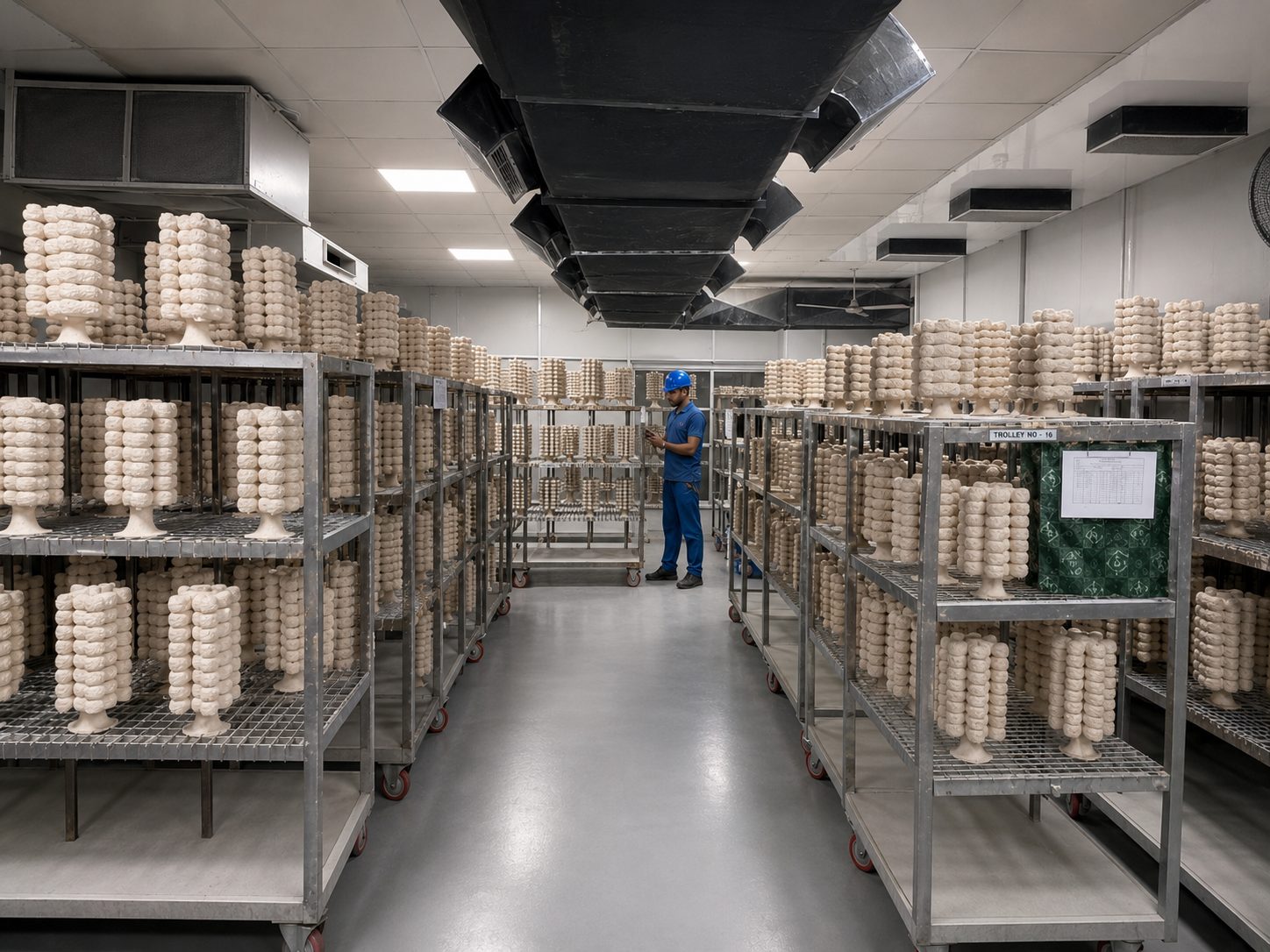
Backup coats are then applied one by one to build shell thickness and strength. Between every coat, the shells rest for a disciplined six-hour drying cycle in our climate-controlled shell room, where temperature, humidity and slurry viscosity are monitored on schedule — around the clock, across shifts.
This patience is what produces shells strong enough to hold molten steel and smooth enough to deliver an excellent as-cast finish.


Completed shells go into our steam autoclave, where a controlled pressure cycle melts the wax out cleanly — fast enough that the wax escapes before it can expand and crack the shell. The empty shells are then fired at high temperature to develop full ceramic strength, burn out residues and preheat the mould so molten metal flows into thin sections without cold shuts.
Recovered wax is reclaimed and reconditioned, keeping the process economical and consistent.

Metal is melted in our induction furnaces and the chemistry of every heat is verified against the specified grade before pouring — no heat is released on assumption.
Pouring temperature is controlled per alloy family, and fired shells are filled in a smooth, continuous pour to avoid turbulence and inclusions.

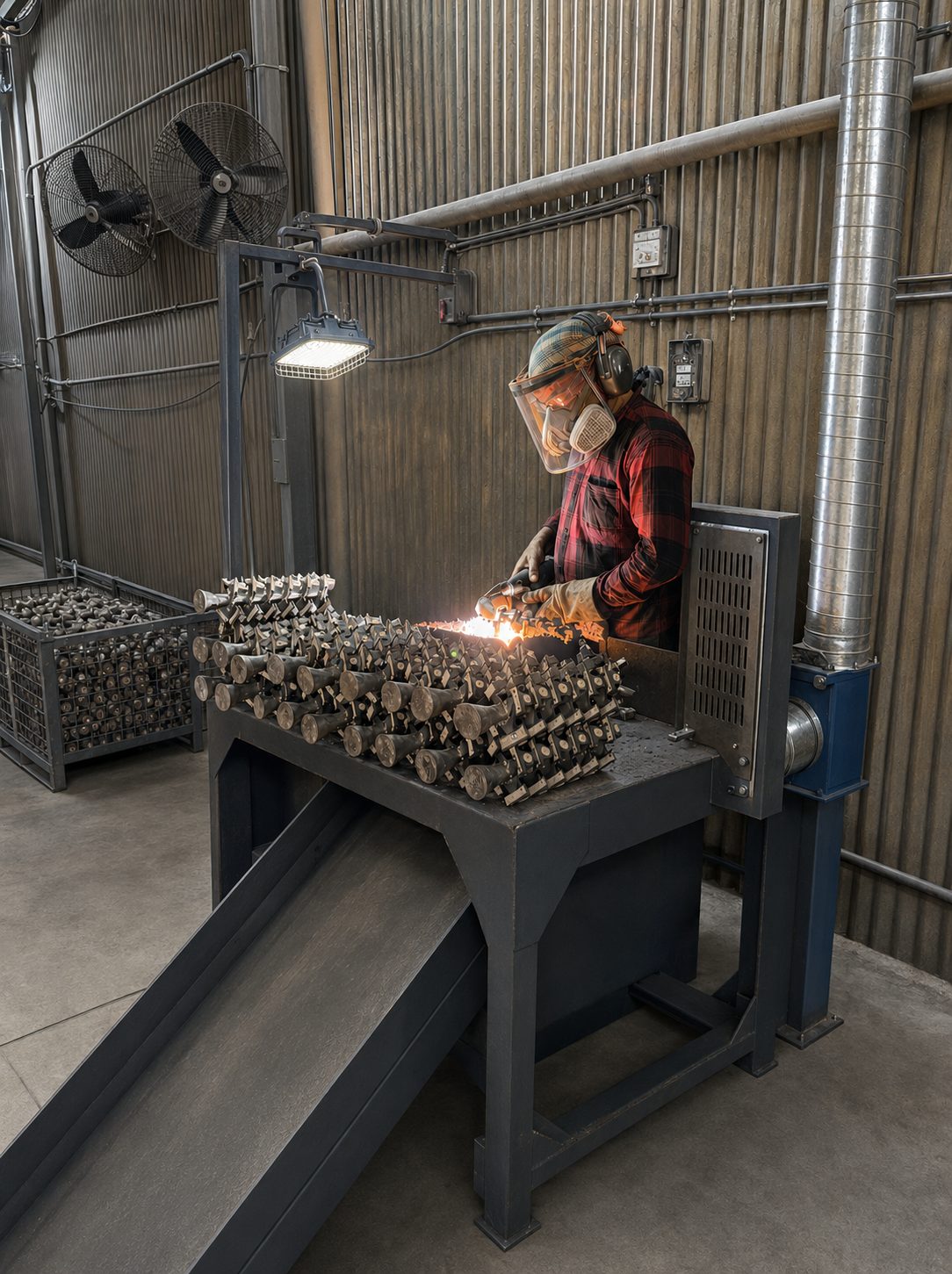
After controlled cooling, castings are knocked out of the shell, cut from the runner system and fettled. Heat treatment develops the mechanical properties your specification calls for, followed by shot blasting and surface finishing.
Where drawings call for machined features, parts are supplied semi-finished or fully machined to print. Every lot passes dimensional and visual inspection against the drawing before packing, with material test certificates supplied on request.


Customer visits and process audits are welcome at our Neemrana works — or send your drawing and we'll take it from here.